

Cart
0
Last Updated: October 26, 2026
Quick Summary
The best newborn clothes for sensitive skin use soft, breathable cotton, ideally organic and finished without harsh chemicals, with flat seams, tagless necks, and covered closures. Start with 100% cotton and add one alternative fabric at a time so you can tell what caused a reaction. Wash new pieces before the first wear with fragrance-free, dye-free detergent and an extra rinse.
- Class A is the most stringent infant textile safety tier, covering formaldehyde, pH, colorfastness, and certain heavy metals.
- The Cotton Baby Onesie Pajama Outfit is 100% cotton with a Class A rating at $27.96.
- The Baby Jumpsuit Class A Waffle is the lowest-priced pick at $14.91.
- Turn a garment inside out and run the inside seam across your wrist to test for ridges or scratchy tags.
- Wash baby clothes separately from adult clothes and towels, and skip fabric softener entirely.
Table of Contents
- Quick Comparison: Best Newborn Clothes for Sensitive Skin
- What Is the Best Fabric for a Baby With Sensitive Skin?
- 7 Best Newborn Clothes for Sensitive Skin
- Baby Clothes Without Tags: Why Seams and Closures Matter
- Baby Clothes for Eczema: What to Look For
- How to Wash Baby Clothes for Sensitive Skin
- Choosing the Right Size and Fit for Your Newborn
- Shop Little Madi Co. for Your Newborn's First Wardrobe
- Frequently Asked Questions
Quick Comparison: Best Newborn Clothes for Sensitive Skin
The best newborn clothes for sensitive skin follow one rule: fewer chemicals, softer fibers, nothing scratchy. At Little Madi Co., we built our newborn line around that principle, and this guide compares seven picks that put comfort first.
Here is the short version before the details:
| Product | Price | Fabric | Best For |
|---|---|---|---|
| Cotton Baby Onesie Pajama Outfit | $27.96 | 100% cotton, Class A | Everyday wear, spring and fall |
| Baby Rompers Jumpsuit Newborn Clothing | $20.86 | 100% cotton, zip closure | Quick diaper changes |
| Baby Bamboo Fiber Clothes Spring | $23.10 | Regenerated cellulose fiber | Warm-weather breathability |
| Solid Color Baby Onesie Pajamas | $16.29 | 95% cotton | Budget-friendly basics |
| Navy Style Baby Clothes Baby Onesies | $29.30 | Cotton, Class A | Layering across seasons |
| Baby Jumpsuit Class A Waffle | $14.91 | Cotton | Summer outings |
| Pure Cotton Newborn Baby Gift Set | $20.78 | Cotton, Class A | Baby shower gifts |
The common thread? Natural fibers, simple closures, and breathable fabrics. Below, we break down each pick and what to look for.
What Is the Best Fabric for a Baby With Sensitive Skin?
There is no single best fabric, but soft, breathable cotton, ideally organic and finished without harsh chemicals, is the safest starting point for most newborns with sensitive skin: it lets air circulate, absorbs moisture, and feels gentle against a newborn's thin skin barrier.
| Fabric | Feel and breathability | Moisture handling | Processing caveats | Wash care | Best for |
|---|---|---|---|---|---|
| 100% cotton | Soft, moderate breathability; gets softer with washing | Absorbs moisture well but dries slowly | Conventional cotton may carry finishing residues; organic cotton reduces pesticide and finish concerns | Machine wash warm, tumble dry low | Everyday basics, year-round |
| Organic cotton | Same hand as cotton, often slightly smoother | Same as cotton | Grown without synthetic pesticides; "organic" refers to farming, not necessarily to dye or finish | Machine wash warm, tumble dry low | Babies with reactive skin |
| Bamboo-derived rayon | Silky, cool to the touch, high drape | Wicks moisture quickly | Regenerated cellulose; solvent processing varies by mill | Cool wash, flat or line dry | Warm sleepers, spring and summer |
| Modal | Very smooth, fluid drape | Absorbs and releases moisture well | Also regenerated cellulose; often blended with cotton | Gentle cycle, low heat | Layering, sleepwear |
| Linen | Textured, crisp, highly breathable | Absorbs moisture and dries fast | Can feel rough until broken in; wrinkles easily | Machine wash cold, line dry | Hot weather, older babies |
| Silk | Smooth, lightweight, low friction | Absorbs moisture but can spot with sweat | Expensive; delicate care | Hand wash or gentle cycle | Special occasions, not daily wear |
Bamboo rayon and modal feel wonderful, but they are regenerated cellulose, not raw bamboo fiber, and the solvent process differs by mill.
Avoid rough wool against bare skin, stiff synthetics like polyester blends, and any garment with scratchy seams or stiff labels. Synthetics trap heat and moisture, which can aggravate irritation.
What certifications actually verify
Labels like "Class A," "organic," and "hypoallergenic" do not mean the same thing.
- Class A (infant textile safety rating): In the standard many imported infant garments cite, Class A is the most stringent tier for textiles that contact infant skin, addressing formaldehyde content, pH, colorfastness, and certain heavy metals. It does not certify that a fabric is organic or suits every baby.
- OEKO-TEX Standard 100: A third-party screen for harmful substances in finished textiles, a chemical-safety check, not a guarantee against irritation.
- GOTS (Global Organic Textile Standard): Covers organic fiber content plus processing and social criteria, broader than "organic" alone, which may refer only to how the fiber was grown.
Pro Tip
When a listing says "Class A" or "organic," read the fine print. Class A tells you about chemical safety limits; organic tells you about farming. Neither one tells you whether the seams are flat or the tag is printed, and those details matter just as much for sensitive skin.
For a deeper look at which baby clothes suit reactive skin, read our guide on what baby clothes are best for sensitive skin.
7 Best Newborn Clothes for Sensitive Skin
Every pick below comes from our own collection, chosen for fabric content, closure design, and how gently each piece sits against newborn skin.
1. Cotton Baby Onesie Pajama Outfit
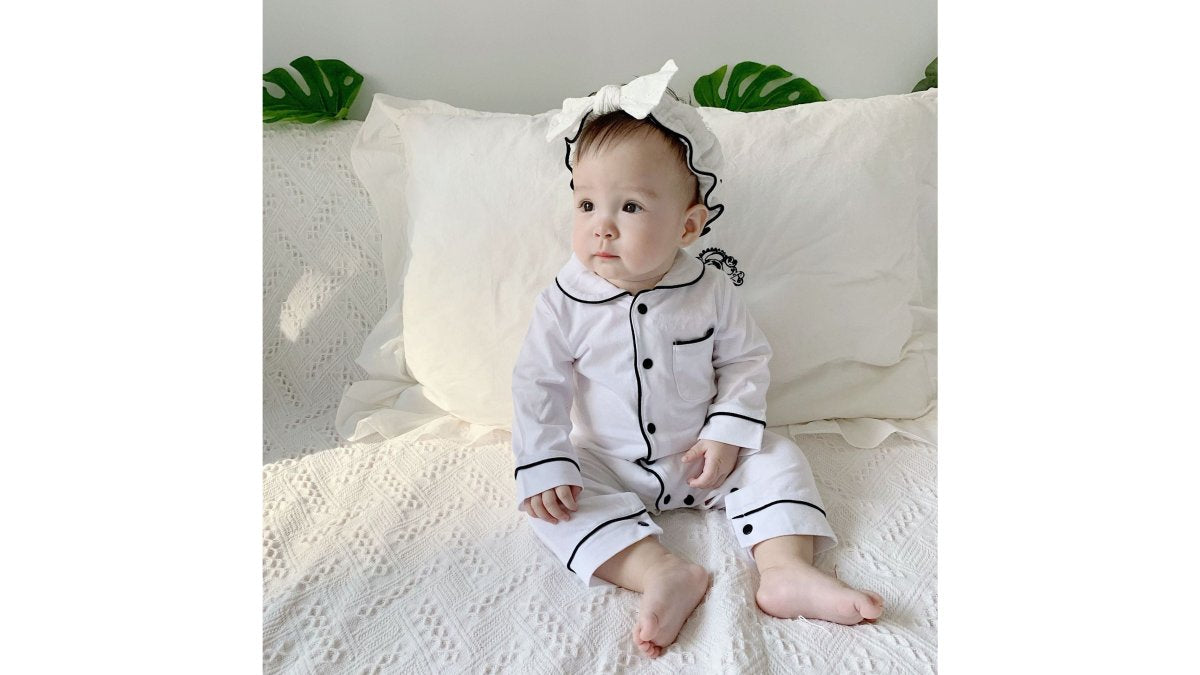
Our top pick for everyday wear. This long-sleeve onesie is 100% cotton with a Class A security rating, the highest safety grade for infant textiles.
The single-breasted closure keeps things simple, and all thread ends are trimmed clean, loose threads are a common irritant.
It comes in sweet pink, handsome blue, and charming white, sized from 0 to 12 months at $27.96.
Best for: daily wear in spring and fall. Skip if: you need a summer-weight piece.
2. Baby Rompers Jumpsuit Newborn Clothing
A zipper closure makes this romper the fastest option for middle-of-the-night diaper changes. It is 100% cotton with an O-neck collar and runs true to size.
Sizes span 0 to 18 months, with weight ranges printed on the chart. At $20.86, it is one of the better values in the lineup.
The full-length sleeves cover arms without bulk.
Best for: overnight changes and cool-weather days. Skip if: you prefer snap closures.
3. Baby Bamboo Fiber Clothes Spring
Bamboo-derived fabric feels noticeably smoother than cotton, and parents of babies who run hot often reach for it first.
Sizes run from 0 to 18 months at $23.10.
The honest drawback: bamboo rayon needs cooler washing and flat drying to keep its shape.
Best for: warm sleepers and spring weather. Skip if: you want a fabric you can tumble dry without thinking.
4. Solid Color Baby Onesie Pajamas
The budget pick: 95% cotton with a casual single-breasted cut at $16.29, sized 0 to 18 months with a full measurement chart.
The solid color palette keeps it simple, and simple is underrated for sensitive skin, fewer dyes and prints mean fewer chances for a reaction.
Best for: stocking up on everyday basics. Skip if: your baby has shown sensitivity to cotton blends.
5. Navy Style Baby Clothes Newborn Clothes Baby Onesies
The fabric is cotton with a Class A rating, and the hood is detachable. Sizes run 0 to 12 months at $29.30, the highest price in the lineup, which reflects the heavier winter option.
Watch out: the detachable hood adds a small attachment point near the neck. Remove it for sleep.
Best for: families who want one style across seasons. Skip if: you want the lowest price per piece.
6. Baby Jumpsuit Class A Waffle Baby Going Out Clothes
A waffle-textured cotton jumpsuit with a short cut, built for summer and priced at $14.91, the lowest here.
Solid Color Baby Onesie Pajamas →
Sizes run 0 to 12 months. The waffle weave adds a little structure, so it holds shape through repeated washing better than thin knits.
The texture is the one thing to check.
Best for: summer outings and photos. Skip if: your baby reacts to textured fabrics.
7. Pure Cotton Newborn Baby Gift Set
Seven cotton pieces in one box, sized at 59cm and rated Class A, the pick for baby showers and grandparents who want one reliable gift.
The set covers four seasons on the listing and costs $20.78. Everything is cotton, so there is no mixed-fiber guesswork.
The limitation is size. It comes in one size only, so it suits a newborn but not a baby already past the early weeks.
Best for: baby shower gifts and first wardrobes. Skip if: you need multiple sizes.
Baby Clothes Without Tags: Why Seams and Closures Matter
Baby clothes without tags remove one of the most common causes of newborn skin irritation: the stiff label rubbing against the back of the neck.
Seams matter just as much. Flatlock seams lie smooth against the skin, while standard overlocked seams create a raised ridge that sits against the spine and shoulders all day.
Closure placement decides comfort too. Snaps and zippers should sit away from the chin and neck, and any metal should be covered by a fabric guard.
A quick checklist before you buy:
- Tagless neck label or a tear-away tag
- Flat seams along the back and shoulders
- Zipper with a chin guard
Baby Clothes for Eczema: What to Look For
For babies with eczema-prone skin, fabric choice is only half the job. The other half is what sits on the fabric and how the garment is built. A 100% cotton onesie with a stiff tag and a zipper against the chin can irritate more than a well-made blend with flat seams. The goal is to reduce friction, trap less heat, and keep chemical residue off the skin.
Start with the fabric and fit:
- Choose 100% cotton or bamboo-derived fabric where possible, and look for Class A ratings on infant textiles. Dyes kept to a minimum, solid colors over heavy prints, reduce one more variable.
- Fit should be close but not tight. Tight clothing traps heat and sweat, both of which can trigger flare-ups. You should be able to slide two fingers under the waistband, and the crotch should not pull against the diaper.
- Avoid wool and rough synthetics entirely during a flare. Save textured fabrics like waffle weaves for calm periods, and press them against your wrist first.
Then look at construction, where most shopping advice stops too early:
- Tagless neck labels or tear-away tags. A stiff label rubbing the back of the neck is a common, preventable irritant.
- Flatlock seams along the back and shoulders. Standard overlocked seams create a raised ridge that sits against the spine all day.
- Zipper guards and covered snaps. Metal or plastic should never rest directly against the chin or neck.
The residue problem
A common pattern caregivers miss: detergent and fabric softener left in the fiber, not the fiber itself, drives irritation. Fragranced detergents, softeners, and dryer sheets leave a film against the skin for hours. If a baby flares after a new detergent or softener, change the laundry routine first: fragrance-free, dye-free detergent, no softener, and an extra rinse. New garments may need two washes before manufacturing finishes clear.
Watch Out
If a rash spreads, oozes, or does not settle with gentle care, that is a question for your pediatrician, not a shopping decision. Clothing choices support comfort; they do not treat a medical condition.
A practical test before you commit to a garment: turn it inside out and run the inside seam across the inside of your wrist. If you feel a ridge, a scratch, or a stiff tag, your newborn will feel it more.
How to Wash Baby Clothes for Sensitive Skin
Wash new baby clothes before the first wear with a fragrance-free, dye-free detergent and an extra rinse. That single step removes manufacturing residues and detergent buildup that can irritate skin.
Here is the routine we recommend:
- Pre-wash everything new. One cycle with gentle detergent before it touches your baby.
- Skip fabric softener entirely. It coats fibers and reduces absorbency.
- Use an extra rinse. Most machines have a setting for it; use it every time.
- Wash in warm water, not hot. Hot water sets stains and wears out cotton faster.
- Dry on low or line dry. High heat shrinks cotton and stiffens bamboo.
- Keep a separate hamper. Wash baby clothes apart from adult clothes and towels.
One insider tip: if a garment still smells like the store after one wash, wash it again. Chemical finishes on new textiles can take two cycles to clear.
Choosing the Right Size and Fit for Your Newborn
Buy for the size your baby is now, not the size you expect in six months. Newborns grow fast, and a garment that swallows them bunches up and rubs.
Our size charts list measurements in inches for length, bust, sleeve, and hips. Measure your baby once and compare against the chart rather than guessing from the age label.
A few practical rules:
- Size up if your baby falls between two sizes
- Check shoulder-to-crotch length for rompers, since that decides whether the piece pulls at the diaper
- Allow room for a diaper in the hip measurement
Fit should be close but not tight. You should be able to slide two fingers under the waistband.
Shop Little Madi Co. for Your Newborn's First Wardrobe
Building a first wardrobe for a baby with sensitive skin comes down to a short list: natural fibers, flat seams, tagless necks, and a wash routine that keeps residue off the fabric.
Little Madi Co. curates baby essentials with comfort and safety at the center, from newborn clothing through toddler stages.
Get started with Little Madi Co. and give your newborn a wardrobe that feels as gentle as it looks.
Frequently Asked Questions
What is the best fabric for a baby with sensitive skin?
Cotton is the most reliable choice for newborn clothes. It breathes, wicks moisture, and washes well without harsh finishes. Look for 100% cotton or cotton blends with a Class A safety rating, like the Cotton Baby Onesie Pajama Outfit. Bamboo fiber is another soft option for babies who run warm, but cotton remains the easiest fabric to launder and the least likely to trigger irritation.
Is organic cotton better for a newborn's sensitive skin?
Organic cotton is grown without synthetic pesticides, which reduces chemical residue on the finished garment. That matters for a baby with eczema or reactive skin. However, the term organic is not regulated the same way on every label, so check for a textile certification or a clear fabric composition listing. If you cannot verify the organic claim, a well-washed 100% cotton newborn clothes option is still a safe bet.
How should I wash newborn clothes to prevent skin irritation?
Wash new baby clothes before the first wear using a fragrance-free, dye-free detergent. Skip fabric softener and dryer sheets, which leave a residue that can trigger flare-ups. Use the extra rinse cycle to clear leftover detergent. Wash baby clothes separately from adult laundry for the first few months, and choose garments that hold up to frequent washing, like the Baby Rompers Jumpsuit Newborn Clothing made from 100% cotton.
Do baby clothes without tags really make a difference?
Yes. A scratchy tag at the neck or waistband can rub against thin newborn skin and cause redness or irritation. Tag-free designs, or garments with printed labels instead of sewn-in tags, remove that friction point. Also check seam placement and closure style: a zipper or snap that sits flat against the body is less likely to bother a baby with sensitive skin than a bulky seam or metal snap pressed into the back.
