

Cart
0
Table of Contents
- Why Sustainable Baby Clothing Matters in 2026
- Quick Comparison: Best Sustainable Baby Clothing Brands
- 1. Little Madi Co.: Bamboo Fiber Essentials for Sensitive Skin
- 3. Little Madi Co.: Sustainable Newborn Clothing Brands for Everyday Wear
- How to Choose Sustainable Baby Clothes: A Parent's Checklist
- Pricing and Cost-Per-Wear: Is Sustainable Baby Clothing Worth It?
- Frequently Asked Questions
Last Updated: October 12, 2026
Why Sustainable Baby Clothing Matters in 2026
Parents today ask harder questions about what touches their newborn's skin. At Little Madi Co., we hear it constantly: "How do I know this fabric is actually safe?" That question drives everything we stock, and it's why the best sustainable baby clothing brands in 2026 are judged on proof, not packaging.

Sustainable baby clothing is apparel made from lower-impact materials, produced under safer working conditions, and documented through third-party certification rather than brand marketing alone. The distinction matters because "eco-friendly" is not a regulated term in the United States.
Key Takeaway
The single most useful habit you can build: check the fabric composition line and the safety class before you check the price.
Quick Comparison: Best Sustainable Baby Clothing Brands
Here's how our top picks compare for a newborn to toddler wardrobe.
| Pick | Best For | Key Material | Price From | Safety Class |
|---|---|---|---|---|
| Little Madi Co. Bamboo Fiber Clothes | Sensitive skin | Regenerated cellulose fiber | $23.10 | Not listed |
| Little Madi Co. Navy Style Onesies | Newborn essentials | Cotton | $29.30 | Class A |
| Little Madi Co. Waffle Jumpsuit | Everyday wear | Cotton | $14.91 | Class A |
| Little Madi Co. Sunken Stripe Romper | Warm-weather wear | Cotton | $12.43 | Not listed |
| Little Madi Co. Cotton One-Piece Romper | Value | 95% cotton | $15.23 | Class A |
For other providers, apply the checklist below.

1. Little Madi Co.: Bamboo Fiber Essentials for Sensitive Skin
Our bamboo fiber line uses regenerated cellulose fiber, a smooth, breathable material that drapes softly against a newborn's skin.
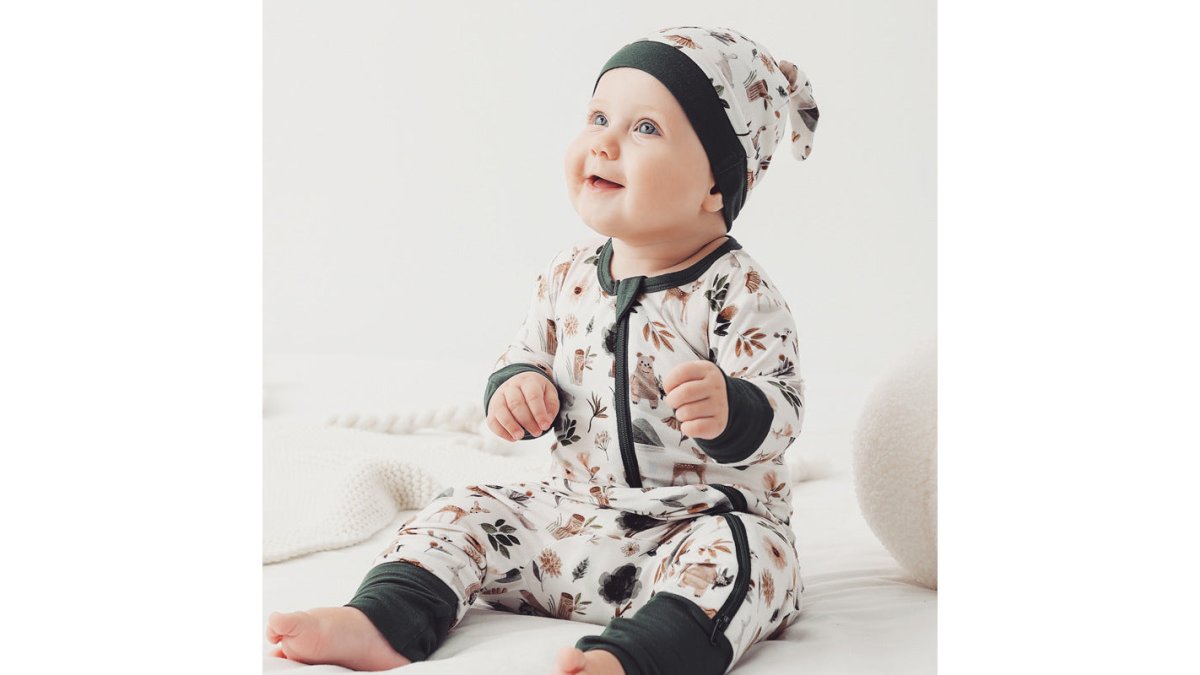
The Baby Bamboo Fiber Clothes Spring ($23.10) comes in a printed animal design with long sleeves, sizes 0-3 to 12-18 months. The Bamboo Fiber Floral Print Baby Jumpsuit ($18.69) uses the same fiber in Nordic semicircle and Nordic Rabbit prints, with a single-breasted closure.

Pros: Class A safety rating, multiple warmth options, detachable hood. Cons: Cotton takes longer to dry than bamboo blends; remove the hood for sleep.
Navy Style Baby Onesies
Bust runs 10.6 to 12.2 inches across three size bands, with shoulder-to-crotch length 13.8 to 15.4 inches.
Baby Cotton One-Piece Romper
Weight bands run 4.9-7kg up to 9.8kg and above, with full length 54cm to 67cm. The diagonal button line eases dressing a wriggling baby.
3. Little Madi Co.: Sustainable Newborn Clothing Brands for Everyday Wear
Our everyday range leans on pure cotton, simple closures, and affordable prices.
The Sunken Stripe Vest Baby Pure Cotton Rompers ($12.43) is a sleeveless triangle romper in six colors, from white through peacock blue, covering 0-3 to 12-24 months.
(/blogs/news/best-organic-cotton-baby-rompers-2026) because it audits the whole chain. Scope limit: it applies to fiber and processing, not fit, sizing, or safety class.- OEKO-TEX Standard 100: tests finished textiles for harmful substances at the garment level. Useful for any fiber, including synthetics and blends. Scope limit: it says nothing about organic content or labor conditions.
- OEKO-TEX Made in Green: combines Standard 100 chemical testing with a traceable supply chain and social-responsibility audit. Stronger than Standard 100 alone, but less common on baby apparel.
Two more you will see on labels:
- AQL (Acceptable Quality Limit): a batch inspection method. An AQL of 1.0 signals tighter defect tolerance than higher numbers. It is a quality-control metric, not a sustainability one.
- CPSIA (Consumer Product Safety Improvement Act) compliance: the baseline federal requirement for children's products, including lead and phthalate limits. Every legitimate baby garment sold in the United States should meet it. It is a floor, not a differentiator.
How to verify a certification in two minutes
- Find the certificate number. GOTS and OEKO-TEX both issue a license or certificate number that should appear on the label, hangtag, or brand's website. No number means the claim is unverified.
- Look it up in the public database. GOTS maintains a public certified-supplier database, and OEKO-TEX has a label ID check. Paste the number in and confirm the brand or factory appears.
- Check the scope. A certificate may cover one product line, one factory, or one fiber, not the entire brand. A GOTS certificate for a single cotton tee does not make the brand's polyester sleepers organic.
- Match the certificate to the item. Confirm it covers the specific product you are buying, not a sibling product in the same catalog.
- Read the fiber composition line. A garment can be OEKO-TEX certified and still be 60% polyester. Certification and fiber content are two separate checks.
Watch Out
"Made with organic cotton" is not the same as GOTS-certified. Without a certificate number you cannot verify the fiber content or the supply chain behind it. The same goes for "non-toxic," "clean," and "eco-friendly", none of these are defined terms in the United States, so they carry no verifiable meaning. Ask for the certificate, not the claim.
Red-flag language that signals an unverified claim
- A vague eco term with no certification number anywhere on the page.
- A certification logo with no license ID beneath it.
- "Organic" used as a brand name rather than a fiber description.
According to the U.S. Federal Trade Commission's Green Guides, marketers must be able to substantiate environmental claims, and vague terms like "eco-friendly" without qualification can be considered deceptive. That is your leverage as a buyer: if a brand cannot produce the certificate, the claim does not have to be taken at face value.
Key Takeaway
Build a two-line note on your phone: the certificate number and the fiber percentage for each brand you buy from. Once you have verified a brand once, you can skip the lookup on repeat orders and only re-check when the product line changes.
How to Choose Sustainable Baby Clothes: A Parent's Checklist
Choosing well comes down to four checks: fiber, safety class, fit, and care.
Baby Bamboo Fiber Clothes Spring →
- Read the fabric composition line. Look for a named fiber and a percentage, not a general "soft cotton" claim.
- Confirm the safety class. Class A is the benchmark for infant apparel.
- Check the size chart against your baby's height and weight. Sizes from different makers are not interchangeable.
On the sensitive-skin question specifically: the American Academy of Pediatrics notes that a baby's skin is thinner and more permeable than an adult's, which is why fiber smoothness and finish matter more at this age.
For care and durability guidance, the American Cleaning Institute recommends checking the care label on each garment, since fiber type determines the right wash temperature and drying method.
Pricing and Cost-Per-Wear: Is Sustainable Baby Clothing Worth It?
Cost per wear settles this argument, but only if you count the whole life of the garment, not just the first three months. Divide the price by the realistic number of wears, then subtract what the item is worth when you pass it on.
Step 1: First-owner cost per wear
Take the Baby Jumpsuit Class A Waffle at $14.91. Worn twice a week through a three-month size window, that is roughly 24 wears, or around $0.62 per wear. The Navy Style Baby Onesies at $29.30 lands near $1.22 per wear.
| Item | Price | Approx. Wears (3 months) | First-Owner Cost Per Wear |
|---|---|---|---|
| Newborn Baby Summer Romper | $10.44 | ~24 | ~$0.45 |
| Baby Jumpsuit Class A Waffle | $14.91 | ~24 | ~$0.62 |
| Sunken Stripe Vest Romper | $12.43 | ~24 | ~$0.52 |
| Baby Cotton One-Piece Romper | $15.23 | ~24 | ~$0.63 |
| Navy Style Baby Onesies | $29.30 | ~24 | ~$1.22 |
On first-owner math alone, the cheaper items win, but that ignores what happens after the first baby outgrows them.
Step 2: Subtract the hand-me-down and resale value
A durable Class A cotton onesie that survives one child and fits a second is the real cost-per-wear win. Here is the mechanic:
- Hand-me-down value. If a garment passes to a second child, the effective cost per wear is cut roughly in half. The $29.30 onesie at $1.22 per wear becomes about $0.61 across two children. The $10.44 romper at $0.45 becomes about $0.23.
- Resale value. Baby clothing in good condition resells. That depends on condition, size, and demand.
- The durability multiplier. A cheaper garment that pills, shrinks, or loses shape after ten washes does not survive to a second owner.
Step 3: End-of-life options that close the loop
When a garment is truly worn out, keep it out of the trash:
- Take-back programs. Some brands accept their own worn items back for recycling or resale credit. Ask before you buy, a brand with a take-back program expects its garments to last.
- Textile recycling. Municipal textile recycling and donation bins accept stained or torn items that resale shops will not. Curbside programs vary by municipality, so check your local waste authority.
- Repair and rewear. A popped seam or lost button is a five-minute fix, not a reason to replace. A basic sewing kit and spare snaps extend a garment's life by months.
For parents who want to close the loop, the U.S. Environmental Protection Agency's advice on reducing waste points to reusing and passing on textiles as one of the most effective ways to cut the environmental impact of what we buy. Hand-me-downs and resale are not a compromise on sustainability. They are the point.
The bottom line on value
What matters is whether the garment survives the first wash, the first growth spurt, and the first hand-me-down, exactly what certification, fiber content, and construction quality tell you.
Best For
Parents building a first wardrobe on a budget who want certified cotton and a size range that stretches from newborn to toddler without rebuying every three months, and who plan to pass items on rather than replace them.
Frequently Asked Questions
What are the best sustainable baby clothing brands in 2026?
The best sustainable baby clothing brands in 2026 focus on organic or bamboo fibers, transparent supply chains, and certifications like GOTS. Little Madi Co. stands out for its bamboo and cotton essentials, offering soft, breathable options for sensitive skin. Look for brands that publish material composition and safety levels, such as Class A, to ensure quality and peace of mind.
Which baby clothing brands use organic cotton?
Many brands now use organic cotton, but Little Madi Co. offers several organic cotton options, including the Navy Style Baby Onesies and Baby Cotton One-Piece Romper. These products are made with cotton and feature safety levels like Class A, making them a reliable choice for parents seeking organic baby clothes. Always check the label for certification details.
What should I look for when buying sustainable baby clothes?
When buying sustainable baby clothes, check for certifications like GOTS or OEKO-TEX, which verify organic and low-impact materials. Look for details on fabric composition, such as organic cotton or bamboo, and safety levels like Class A. Also consider durability, size range, and whether the brand offers transparent information about its supply chain and ethical production.
Are organic baby clothes better for sensitive skin?
Little Madi Co.'s bamboo fiber clothes and cotton rompers are designed with comfort in mind, making them a good choice for babies with delicate skin.
Are sustainable baby clothes worth the extra cost?
Sustainable baby clothes can cost more upfront, but they often last longer and can be passed down to siblings, improving cost-per-wear. For example, Little Madi Co.'s rompers range from $10.44 to $29.30, and their durability means they can withstand multiple washes. Investing in quality pieces reduces the need for frequent replacements, making them a practical choice for budget-conscious families.

